
Projects
We have included some examples of the projects that Worcestershire Wildlife Consultancy (WWC) have been involved with in recent years. Click a link to go to a specific project.
Two Rivers Development Ltd. - Reptile Translocation, Forest of Dean, Gloucestershire -
Biodiversity Survey of Malvern Hill ANOB
Wyre Forest District Council & Worcestershire Wildlife Trust - Breeding bird survey
Barratt West Midlands - Bat & great crested newt surveys, European Protected Species Licences, Mitigation
Herefordshire Nature Trust - Dormouse monitoring programme & woodland management advice
Barratt West Midlands - Badger monitoring & licence, CSH Ecology Assessment
Two Rivers Housing Association - Reptile survey & mitigation, CSH Ecology Assessment in Gloucestershire
Environment Agency - Water vole monitoring along Battlefield Brook
University of Worcester - University Park Ecological Impact Assessment
The Prime Foundation - Fort Royal School Sensory Garden
Worcestershire Wildlife Trust - Feasibility study & management plan for recreation of heathland
Natural England & Worcestershire County Council - Hartlebury Common SSSI Management Plan
Worcestershire Wildlife Trust Surveys & Reserve Management Plans
Natural England Sustainable Grazing Project for Herefordshire & Worcestershire
British Waterways Birmingham Canal Water Vole and Otter Survey
Shropshire County Council A comprehensive NVC survey, protected and notable species survey of Quarries in South Shropshire
West Mercia Constabulary Great crested newt mitigation & monitoring
Worcester University BREEAM EcoHomes & protected species licensing
Gloucester City Council - North Gloucestershire Joint Core Strategy
Two Rivers Development Ltd. - Reptile Translocation, Forest of Dean, Gloucestershire -
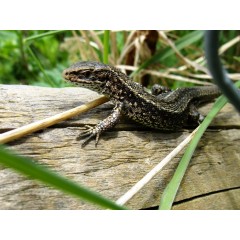
The Consultancy undertook a preliminary ecological appraisal of a site in Bream, Forest of Dean for Two Rivers Development Ltd. who were proposing an affordable housing scheme. As the site contained suitable habitat for reptiles, further surveys revealed a population of slow-worms and common lizards. The Consultancy devised a reptile mitigation scheme that involved retaining suitable habitat along the edges of the site and enhancement of the adjacent grassy lane for reptiles in liaison with the Forestry Commission. In addition, to ensure enough suitable habitat for the reptile population, a local receptor site was also found which would be managed sympathetically for reptiles. Following the creation of several reptile hibernacula (piles of sticks and rubble) and modification of the habitat to make it more suitable for reptiles, the animals were carefully translocated into the onsite receptor site and once a maximum number for that area had been reached, the remaining animals were translocated to the nearby receptor site. Following the translocation, pupils from Bream Church of England Primary School accompanied Elizabeth of WWC on the first reptile monitoring session of the retained area on site so that they could learn about slow-worms and common lizards. Future monitoring of both receptor sites is planned to measure the success of the project.
Further information about the project can be found at the Forest of Dean Review link below:
Biodiversity Survey of Malvern Hill ANOB
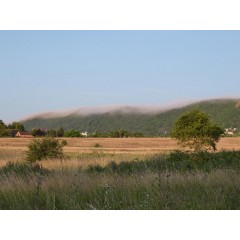
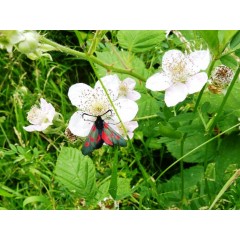
Worcestershire Wildlife Consultancy was commissioned by the Malvern Hills Area of Outstanding Natural Beauty (AONB) to undertake a biodiversity survey within part of the Malvern Hills AONB. The survey focussed on recording butterflies, day-flying macro-moths, bumblebees and birds, and was requested to improve the quantity and quality of biological records for a defined area within the AONB. A survey methodology was established to facilitate repeatability so the collected biological records could serve as baseline data in a potential monitoring programme with a long-term aim to inform landscape-scale habitat management.
Wyre Forest District Council & Worcestershire Wildlife Trust - Breeding bird survey
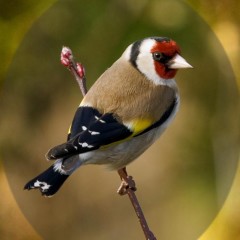
Worcestershire Wildlife Consultancy was commissioned by Wyre Forest District Council and Worcestershire Wildlife Trust to undertake breeding bird surveys at The Rifle Range and Devil’s Spittleful Site of Special Scientific Interest (SSSI) in Worcestershire. The survey was commissioned in order to inform ongoing habitat management connected with the conservation and restoration of lowland heath, which the Consultancy are also advising on, both from a botanical perspective and habitat enhancement for reptiles.
Barratt West Midlands - Bat & great crested newt surveys, European Protected Species Licences, Mitigation
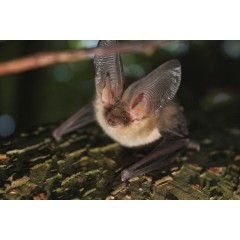
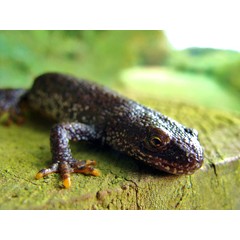
The Consultancy undertook a series of bat hibernation surveys, dusk emergence and dawn entry surveys of redundant buildings at Yarnfield Park, Staffordshire for Barratt West Midlands. These surveys revealed the presence of summer, maternity roosts for common pipistrelle and brown long-eared bats in a dilapidated accommodation block as well as summer, non-maternity roosts for common and soprano pipistrelle bats in a disused office block. Surveys undertaken by WWC for great crested newts revealed the presence of a small population in a nearby pond. Consequently, European Protected Species licences for bats and great crested newts were successfully applied for and appropriate mitigation was devised for both species in terms of timing of works and habitat enhancement measures. For the bats several dedicated free-standing bat lofts were designed within the new residential development in addtion to raised ridge tiles and bat tubes to provide replacement roosting features. Future monitoring of the bat lofts and other roosting features is planned to assess how effective the mitigation has been.
Herefordshire Nature Trust - Dormouse monitoring programme & woodland management advice
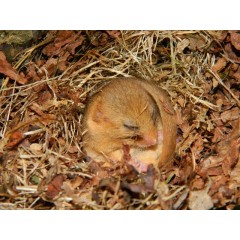
The Consultancy have undertaken a dormouse monitoring programme in Herefordshire for The Herefordshire Wildlife Trust. The survey information will be used to enable the Consultancy to provide recommendations for future management of the woodland to benefit the local dormouse population in addtion to other woodland fauna. The data collected will be submitted to the People's Trust for Endangered Species' National Dormouse Monitoring Prgramme and will also provide a baseline for a longer-term dormouse monitoring programme of the woodland.
Barratt West Midlands - Badger monitoring & licence, CSH Ecology Assessment
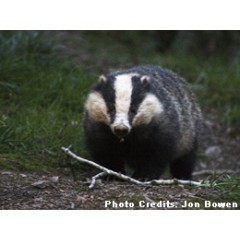
Worcestershire Willdife Consultancy was commissioned by Barratt West Midlands to undertake a Phase1 habitat survey and protected species survey assessment at an urban location in Shirley, West Midlands. This revealed the presence of several setts situated in the middle of the proposed development. These setts were subsequently monitored for several months, which confirmed the presence of a small main sett. This necessitated the creation of an artfical sett in a retained area on site. A licence to close a sett was successfully applied for and the badgers were excluded from the setts prior to their closure under the supervision of an Ecological Clerk of Works. Additional monitoring of the artificial sett is planned to assess the success of the mitigation. Barratt West Midlands subsequently required a Code for Sustainable Homes (CSH) Ecology assessment to be undertaken. This gave the Consultancy the opportuntiy to make appropriate planting recommendations for the retained area to enhance its value for badgers and other wildlife. Barratt West Midlands were awarded a high number of points for the CSH Ecology Section.
Two Rivers Housing Association - Reptile survey & mitigation, CSH Ecology Assessment in Gloucestershire
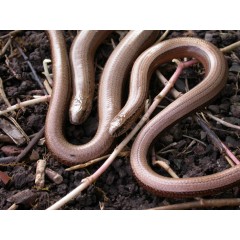
WWC were commissioned by Two Rivers Housing Association to undertake a Phase1 habitat survey and protected species survey assessment at a residential site in Lydney, Gloucestershire. This led onto dedicated reptile surveys which resulted in the identification of a large slow-worm population. After negotiation with the Local Planning Authority a reptile enhancement and translocation strategy was agreed for retained habitat within the site and also for a nearby receptor site, which is currently being implemented. In addtion, the Housing Association required a Code for Sustainable Homes (CSH) Ecology assessment to be undertaken by the Consultancy, which included additional wildlife enhancement and protection recommendations and resulted in the Housing Association being awarded a high number of Eco points.
Environment Agency - Water vole monitoring along Battlefield Brook
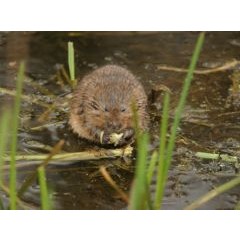
Worcestershire Wildlife Consultancy were commissioned by the Environment Agency (EA) to undertake a water vole survey on several stretches of the Battlefield Brook corridor in Bromsgrove to update previous WWC survey results and to assess the impact to water voles of EA work to maintain flows within the catchment. The population of water voles within the Battlefield Brook was still low and concentrated in the southern end of the brook. Encouragingly increased numbers of water vole signs were found in the uncanalised sections of the brook where habitat enhancement works have been undertaken.
University of Worcester - University Park Ecological Impact Assessment
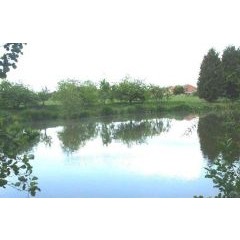
The Consultancy undertook an Ecological Impact Assessment (EcIA) of the University Park project for University of Worcester and Wrenbridge Land Limited. The project aims to provide long-term expansion potential for the University of Worcester and to establish an enterprise, learning, wellbeing and research park which will enhance links between the University, local business and the scientific community. The project also involves the creation of a ‘green’ framework which integrates and links all the landscape, ecological, drainage and topographical assets. The vision for the site is to provide long-term expansion potential for the University and to establish an enterprise, learning, wellbeing and research park which will enhance links between the University, the local business and scientific community.
The Prime Foundation - Fort Royal School Sensory Garden
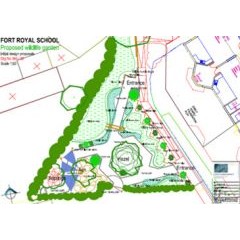
Worcestershire Wildlife Consultancy was commissioned by The Prime Foundation to design and implement a wildlife friendly sensory garden at Fort Royal Community Primary School in Worcester. Fort Royal School is a special needs school with students who have a range of physical and learning disabilities. The garden was designed following a consultation period with the school so that the ideas and contributions of the teachers and children could be incorporated into the final design. The result was an area which aims to meet the physical, educational and emotional needs of the children by providing them with a fully accessible wildlife friendly garden which gives them ready access to nature in a safe environment. Both The Prime Foundation and Fort Royal School felt the garden was a great success and the school looks forward to using it in the future.
Worcestershire Wildlife Trust - Feasibility study & management plan for recreation of heathland
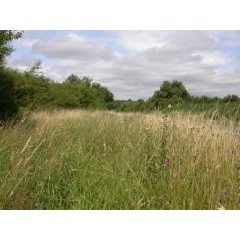
WWC undertook the feasibility study at Blackstone Fields to recreate heathland from arable fields and created a management plan for the site on behalf of Worcestershire Wildlife Trust. To summarise, this included; the application of elemental sulphur; topsoil removal; soil inversion; removal of nutrients via cropping and natural regeneration. Of these, soil inversion was chosen alongside natural regeneration and nutrient removal via cropping, which will help to enhance the biological interest that already occurs on site. An important part of the project involved surveying and then monitoring the invertebrate species, vegetation communities and soils on the site.
Natural England & Worcestershire County Council - Hartlebury Common SSSI Management Plan
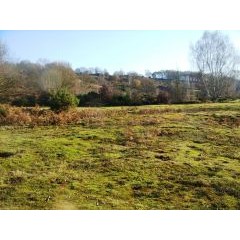
This project involved producing an implementation plan identifying the management prescriptions and a fully costed schedule of works to be used to consider an application for a Higher Level Stewardship (HLS) Agreement. The aim of this plan was to secure the ongoing, long-term favourable management of Hartlebury Common Site of Special Scientific Interest (SSSI).
Worcestershire Wildlife Trust Surveys & Reserve Management Plans
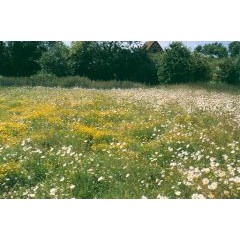
Over the years the Consultancy has worked closely with the Worcestershire Wildlife Wildlife Trust undertaking numerous species and habitat surveys, writing management plans for reserves and carrying out practical works throughout the county. A recent project included up-dating over 20 reserve management plans on to the Trust's Countryside Management System (CMS) database.
Natural England Sustainable Grazing Project for Herefordshire & Worcestershire
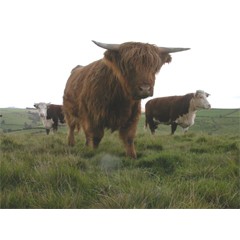
This applied conservation project, involved a review of SSSI grassland management in Worcestershire (Wyre Forest SSSI) and following a detailed desk study, including liaisons with site owners. Various factors were identified as to the condition of these habitats. From these findings, a series of recommendation were made to counter habitat deterioration. The completed report will aim assist all parties involved in maintaining and enhancing these important habitats.
British Waterways Birmingham Canal Water Vole and Otter Survey
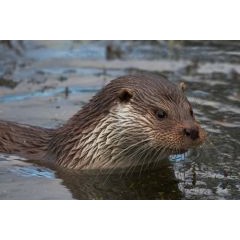
An extensive survey along approximately 25 miles of the Worcester and Birmingham Canal was undertaken which provided evidence of water voles and otters and also identified new and potential habitats for these rare mammals .
Shropshire County Council A comprehensive NVC survey, protected and notable species survey of Quarries in South Shropshire
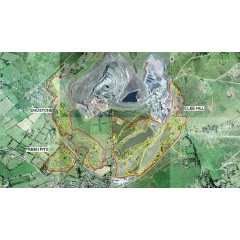
This survey was undertaken to provide detailed ecological information at former and operational hard and soft rock quarries throughout south Shropshire. A full NVC survey as well as protected and BAP species surveys were undertaken, followed up with management recommendations that fed into a larger project to inform the future restoration and management of these sites. For this project all the information was digitised using our in-house GIS system.
West Mercia Constabulary Great crested newt mitigation & monitoring
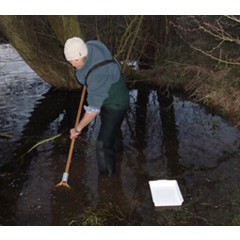
WWC were engaged to monitor the known populations of great crested newts on the Hindlip Estate in order to measure the effects of the mitigation, which formed part of the European protected species license granted by Natural England for the prestigious gatehouse development.
Worcester University BREEAM EcoHomes & protected species licensing
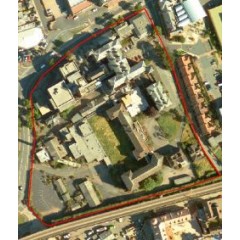
WWC have been appointed as the longterm ecological consultants for the £120 million re-development of the St. John's Campus and the old Worcester Infirmary site which is to become the new city campus . A baseline Phase 1 habitat survey, dedicated bat and badger surveys and protected species development licenses have all been undertaken or are ongoing as well as a BREEAM assessment and continuing 'Ecological Clerk of Works' at both sites.
Gloucester City Council - North Gloucestershire Joint Core Strategy
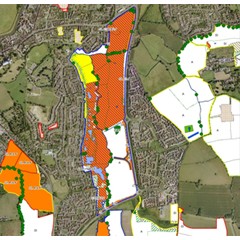
As part of the Joint Core Strategy (JCS) for Gloucestershire, WWC undertook an extensive Phase 1 survey and protected species survey assessment of targeted sites covering approximately 3000ha within the political boundary of Gloucester, Cheltenham and Tewkesbury Councils.
The detailed ecological information, mapped using our in-house Geographical Information System (GIS), will be used to inform the Local Development Framework and form part of the Joint Core Strategy (JCS) work on development allocations as well as assisting in the Green Infrastructure deliberations.